Unit 9 // Reflective Journal

Working on the project as a whole, my understanding of ‘working to a brief’ changed in many different ways. I am able to use knowledge of the characteristics and context of a media and communication activities.

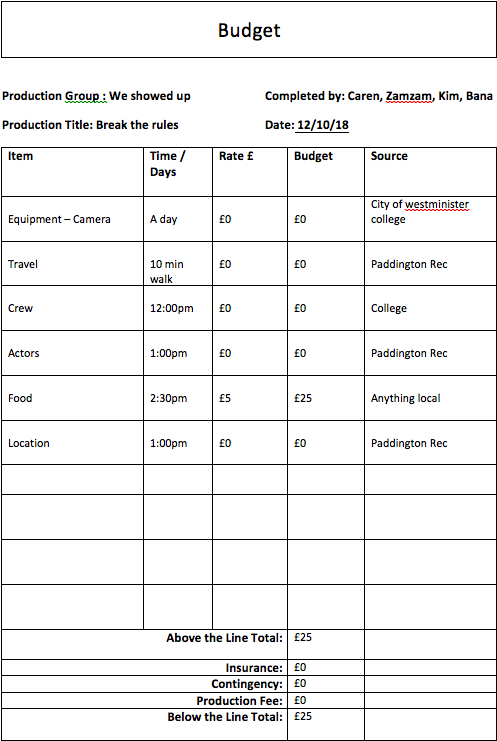
In this unit, we were assigned to produce a video for the Active Westminster Awards by working in groups. The council tasked us with producing short videos that showcase some of the work of the Active Westminster partners in 2018. Our video is about the sports activities at Paddington rec. We talked to a few members of staff about people not using the cycling zone and areas that are free access, we also interviewed them and asked them questions about the free access for everybody.

The team functioned pretty well as we all discussed everything and listened to everyone’s different ideas. We all had different roles and responsibilities throughout the whole process of filming, Bana introduced what the film is about and she interviewed some people from Paddington Rec. Kim was the cameraman, she filmed all the scenes and shots for our video. Myself and Zamzam took turns trying to look for a good spot to film and looking for people who are playing a specific type of sport for us to film.          We first started working on our proposal as a group and began planning for our video sharing all of our ideas and picking the best one in the end.

We then emailed a girl that works at Paddington Rec called Jane and we organised a day that both her and everyone from my group was happy with and not busy in order to go there and film our first shot for the video with Jane’s help. After that we started working on our call sheet and budget form and making sure that we get our other work done for this unit. then filmed the scene of the no cycling sign in the park with the help of two girls by making them cycle over the no cycling sign for the purpose of our video. Once we finished filming we then started editing the video until it was completed.

In my opinion, I think the production was successful as we worked together as a group and filmed everything that we needed to. There is a drawback during the filming, we ran out of time to go back to Paddington Rec and film more shots as we did not film a variety of different activities as much as we needed to. We also needed to film more interviews but we also ran out of time to do that as we had other work to do for this unit.

The strengths of the completed film is that it has a very good quality and lots of different angles and shots which makes the film look good and professional. I also think the editing was successful. On the other hand, the weaknesses of the completed film is that it does not have enough scenes of interviews and shots of different activities.

Everyone’s responses to the film have been both good and bad, some thought it is very good and they like the idea of the cyclists going over the ‘no cycling’ sign and the way we used good shots to film. However we got some disadvantages for example, some thought it is quite short with not much footage in the video, and some did not really understand what we are trying to show or prove in the video.

If I could do the project again, I would make time to film more shots of different activities at the park and also interview as many people there as we can.
Unit 11 // 2.1

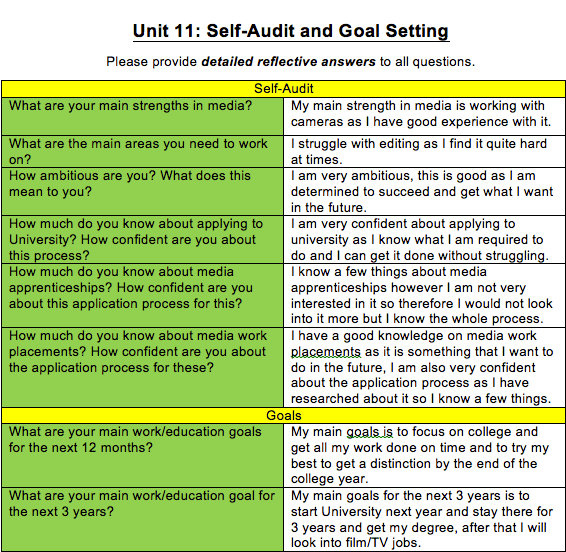
There are a range of communication skills and knowledge required to make effective applications towards chosen progression routes. Here I will critically evaluate them against my own aims and ambitions. It is hoped this will enable me to develop my skills and knowledge to strengthen my application.

The previous tasks have helped me increase my knowledge and made it easier for me to make a choice for my future. Higher education has made me realise how important University is as it will prepare me for the future and will improve my skills on camera work (as I would like to study film and TV) and editing and many other different things to do with my chosen course. 

The task on further education was very useful as I now understand the pros and cons of either going to college or choosing a short/another media course. I understood why college can be a good idea for further education as it will help me decide if my chosen course is the right one for me and if so, prepare me for the future which is if I want to carry on studying my chosen course at university, or do an apprenticeship instead.

For apprenticeships, I did not know much about it and wasn’t very interested until I worked on this task and got to find out why sometimes apprenticeships are useful if you do not have any other options or if you are just not interested in college or university. I now have a better understanding on the pros and cons of an apprenticeship and peoples different opinions on it which made me have my own opinion on it. Therefore the previous task on apprenticeship helped me gain more knowledge about it by researching into it and answering several questions.

Employment and self-employment, I developed my knowledge on this particular task as I learnt the opportunities that you may achieve by being employed and I listed them in my previous task. I also learnt that in order to have self-employment or employment in general, I would have to have some work experience from the past as it would prepare me for the future.

Communication skills:

Written, aural and visual are all effective skills on the course, due to the fact that it will be needed for the future for example going to university or for your future career/job, as well as improving your communication skills and confidence. I have applied these skills by writing several tasks for my own media course and using creativity to make it the best that I can. I have also used both aural and visual skills by listening to everyone else in the class and what they have to say about certain things, this was useful as I get to see and hear everyone else’s different opinions on whatever the topic is and I can gain more knowledge on it and learn new things from their opinions. I will improve my communication and creativity skills (also written, aural and visual) by listening to everyone even if I do not agree on their opinions and I will interact more with people when I go to university which will help me boost my confidence and self-esteem for the future. 

Knowledge:

This course has helped my skills, techniques and the understanding of any specific subject as we done a lot of practical work for example, making our own Netflix series, a music video, interviewing people, some photography lessons. These all developed my skills on camera work, editing, and team work as I now know how to use a camera properly and to share my ideas with everyone from the group with good communication skills. 

In conclusion, what I have learnt from this task is the things that I have achieved and gained knowledge about throughout the course and also the things that I need to improve on in the future. I also learnt why higher/further education, apprenticeships and employments are important and what I have understood from them.

Unit 11 // Task 1.2

This task cover progression routes and trends into Creative Media Production. While there are several different routes to my own particular goals I wish to analyse each route to establish the effectiveness of them for my own future ambitions. It is hoped that by increasing my knowledge in this field, I can make a more informed choice regarding my future.

For further education, I feel as if college is the best option as it will help me gain more knowledge on the whole media industry and see if this course is the one for me or not. The college provides us with a level 2/3 course which is also very useful as we can learn different things throughout the years, I have a lot of opportunities in my chosen path as I have also had work experience, even though they were not media related, it still helped me boost my confidence and self-esteem when it comes to working with strangers which is what I will need to do in the future working in the media industry. The pros of this particular path is that it help me gain more experience and knowledge on camera work, editing skills, producing my own films/videos etc, so that I am prepared for the future. However the cons is that if I study a certain subject (media) for 3 years and I do not think it is the right one for me at the end then that would have been a waste of time. Also college is quite hard so I will have to make sure I work very hard and get all of my work done to achieve my goals. 

For higher education I think it is best for me to go to University, this will help me not only get my degree, but also get me ready for the future. The course I would choose at University is film/TV, this will help me have a better understanding of the course itself and if I am ready to continue my journey working within this industry for the next 3 years in Uni and after that outside of Uni. There are a lot of opportunities that I can have for example, it will prepare me for the future when I am ready to work in the media industry specifically with filming and TV. It will also improve my skills with editing which is something that I find quite difficult. The pros of this is it will help me develop transferable skills that will help me succeed in my future career. It will also make me more employable as being educated to degree level is very useful for the future. however, the cons is that I go there but I change my mind and realise that Uni is not for me, this comes with a price as I would have to pay and waste my time. 

An apprenticeship is a job which includes training and getting paid. There are three types of Apprenticeships which are; foundation, apprenticeship and higher apprenticeship, this is due to the fact that certain jobs need different qualification levels high than others.

There are pros and cons when it comes to apprenticeships.

  • The experience that you had can make your CV stand out and can help in the future.
  • It will increase you confidence and help you have better communication skills as you will be interacting with lots of different people.
  • It is a chance to use and show your skills and maybe even improve them by working and studying at the same time.
  • You will always have support if you need it by your manager and to show you how things are done.
  • The most important advantage is that it will be very rewarding in the end as it will lead to a variety of options that you will want to prosper in the future, also showing that you have got the plus qualifications is important and makes you have a better chance of good career prospects. On the other hand, there are also some disadvantages of apprenticeships.               
  • You cannot gain access to certain careers through an apprenticeship route this is due to the fact that it is essential for certain careers of having an undergraduate degree.                           
  • The responsibility, it might be overwhelming for some people at first as there will be many deadlines to meet and making sure you please your clients.                                                     
  • The salary is lower.
  • Holidays are shorter.

The requirements to do an apprenticeship is it will be useful to have GCSEs in english and maths in order to do the required calculations and measurements with whatever course you decide to take. At least five GCSE grades A – C  also Level 3 qualifications. Some will expect or require applicants to have subjects related to the particular apprenticeship.

  1. Digital marketing: Maintaining a distinct online presence by creating and scheduling diverse and topical content to increase brand awareness, followers and engagement across a number of social platforms. The qualifications needed are GCSE english and maths. It requires you to work 30 hours per week and you earn £120.00 per week which will increase after 12 months once qualified. The desired skills include being able to have blog writing skills, hard working and productive, good grammar and spelling, and good research and analysis skills.
  2. Senior Media Officer: You will be responsible for line managing a team of Information Officers to deliver media announcements and campaigns to raise awareness of DfE and GEO policy. This will include providing bespoke advice and guidance on how to effectively reach external audiences and maximise positive responses from stakeholders. You will earn £44.134 – £49,063 a year, you will need to have had experience of working in a fast-paced media office and management skills. Also good writing and communication skills.

There are four levels of apprenticeships which are the following: Higher apprenticeships, Intermediate apprenticeships (equivalent to five GCSEs), Degree (which can include study at university) and Advanced level apprenticeships (which are equivalent to two A-levels). 

A work placement is supervised work with a company, depending on the job you want to take. You will need to be studying at school/college/university and have good communication skills, also experience with work from your past or at school will help you to do a work placement.

Apprenticeships help you gain the skills and knowledge you need to succeed in your chosen industry for your future. Getting into employment earlier means there’s lots of potential for you to progress in your career quickly. 

Work placements helps you have a potential to provide opportunities for students to learn more about their own abilities. It helps them explore their strengths and weaknesses and find out what they need to improve on in their skills.

In conclusion, work placements for me would be the better option as I want to study at university rather than doing an apprenticeship, also in my opinion I think work placements would benefit me more as it would boost my confidence and improve my communication skills with people and get me ready for the future.

Employment and self-employment, there are many opportunities such as:

  • Accountancy, banking and finance.
  • Business, consulting and management.
  • Charity and voluntary work.
  • Creative arts and design.
  • Engineering and manufacturing.
  • Healthcare.

To achieve them, you can do work experience on one of these options to prepare you for your employment/self employment in the future. 

From this task, I have learnt the differences between apprenticeships and work placements and how they both benefit us in different ways. I also learnt new things about them both and have a better understanding of them.

Unit 11 // 2.2 // Personal Statement

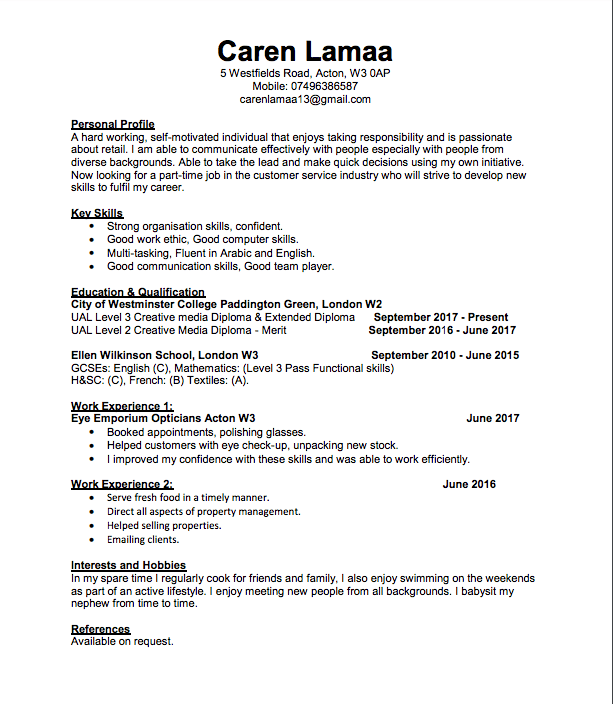
The reason I chose this course is because ever since I was little, I have always enjoyed playing around with a camera and capturing random pictures/videos of a variety of different things such as nature, views, food, family etc. Every time I am on holiday with family or friends, I take the opportunity to capture pictures or videos for memories of them. Not to mention the views and sites of the country that we visit. As I got older, I started to enjoy it even more, not just the camera work, but also editing videos that I took myself, I used to go back to the old photos and videos that I took and check if there are any improvements with my camera skills and angles. Therefore I thought it would be a great idea to study Media in the future. And that is what I did.                                    I know a few things about the course; it is very similar to the work I have done at college, for example, learning how to produce and edit my own Netflix series trailer and working in the studio in order to practice the different roles whilst working with TV.


Studying creative Media in both secondary school and in college has been very useful, as I now have gained more knowledge on camera work and about the media industry altogether. I decided to do BTEC Media as I enjoy doing practical work and making my own movies to help me develop skills of editing and camera work. I mainly enjoyed the practical units where I was told to create movies, music videos and video installation etc. I worked in groups with my classmates and visited different sites of activities, we also had the chance to interview people and ask them questions about whatever the topic was. I have done well in mainly working with cameras, as that is what I enjoy doing the most. Nevertheless, I would like to improve on my editing skills, as that is what I struggle with and find quite hard at times.

Furthermore, I have had some work experience in different work placements such as working in an office, at the opticians and at the nursery in my old primary school. I have learnt how to be independent and confident after work experience as I had to communicate with people that I did not know which was a struggle for me as I was quite shy, however work experience boosted my self confidence. As well as learning how to interact with people from different cultures, I also had the chance to work with little kids and seeing how different and fun it is. The skills that I have learnt from work experience will be useful for when I start this course as I now have more involvement working with people that I do not know. Even though it is not linked to my course (media), I believe that co-operating with different people from all around the world is important as it builds up my self-confidence and adds up to my knowledge.

As part of my daily routine, I enjoy going to the gym three times a week with my friend for good company. Correspondingly, I try to read as much as I can at home to improve my English skills, I attempt to grab a newspaper on the train on my way to college to spare time as the journey there is quite long. Moreover, I have always wanted to learn how to play a musical instrument for example the guitar, however my main focus was on my studies and improving my skills with camerawork and filming. From these activities, I have learnt how to enjoy my life whilst facing difficulties with studying. I was always convinced that life is not all about studying and working hard, but also enjoying my time suitably.

In conclusion, I would love to do the course to expand my knowledge on filming and editing individually as it will support me in the future to pursue my aim ever since I was young. I would like to think that I am right for the course, this is because I have had a lot of experience both from secondary school and college with producing my own short films and editing them, also by coming up with ideas on my own and in groups.

Thinking of my future career and after doing some research about what I would like to do, I am really excited but also nervous of the hard work that is involved with the film and TV industry with lots of people and cameras around, interacting with everyone from the team. Besides achieving my goals and my ability to succeed in this course, I will make sure I complete every task in the best possible way I am supposed to even though it will be challenging at times.

A Brief Report

Introduction:                                                                                                                                        The following report will explain what a brief is and the requirements of working to a brief in the video production industry.

There are a number of different types of briefs in the industry. These can vary greatly from competition briefs open to the public to commissioning briefs for large TV channels.

Contractual: Contract briefs are between a client and the employees, it states the assignments and responsibilities that are required and how the company works. If any of the employees break an agreement they would have to face legal actions. For example when a client is ready to sell a product on the television as an advert, the employee would produce and create the advertisement along with the production crew.

There are a variety of advantages for a contractual brief in order to help both client and production company for example, there are agreed parameters in a contractual brief which guarantees that both parties can get through the agreed contract with no disagreements or consequences. It is also beneficial as the company can be fully aware of what needs to be done which is because the contract will be in detail and understandable. However, there are also some disadvantages to contractual brief which are mainly based on the production company. For example, it can be too commanding for the company because it does not accept a room just for freedom as it can cause the company to be an unresponsive aspect for the clients.

Negotiated: Negotiated briefs include two parties that have different ideas and arrangements should be found in order to make both sides happy which can sometimes engage and involve a third party. An example of a negotiated brief is a marketing company that has a variety of different ideas that include both pros and cons. They can put their ideas together which leads to a result where both parties agree on.

An advantage of a negotiated brief is once everyone has come to an agreement, it can produce an extremely detailed plan of what is recommended and also by helping both the producer and client both understand the production costs. There will be less clash between the two parties as everyone has discussed and settled on the agreements before-hand.                                                                                                                                                    On the other hand, there are also some disadvantages for a negotiated brief. Sometimes, it can take a lot of time discussing which can reduce the amount of time taken to produce the finished product. Also, it can cause issues as the parties may only agree on certain ideas however do not reach an actual agreement altogether which will be a waste of time schedules and there will be no contracts found.

Formal: A formal brief is when there is a brief given to a production company by a client, the two parties would have already agreed on the content of the brief beforehand and only includes what is only needed within the production.

There are multiple advantages for formal briefs for example, this brief is one of the easier contracts to understand and read than other briefs, this is because of the fact that it is all written in a formal style in order for both production companies and clients to be fully aware of what is required. Moreover, it can be easily discussed and to engage about with a large group which foreshadows that the contract is suitable for a large group of clients or production teams.                                                                                                      However, there are also some disadvantages to this brief. This type of brief does not always cover legal issues which can have a risk for the two parties. Another drawback is that you cannot be able to change the contract once it has been agreed on, therefore the company cannot make any improvements or changes once it has been signed.

Informal: An informal brief is the opposite of a formal brief. It is one that is agreed on throughout the conversations between clients and companies, so there would be no proof of the agreement. Between the two parties to have their agreements, an informal brief is based on trust.

This type of brief has a variety of advantages, one of them is that due to it not having any written contracts, if any of the parties cannot meet the end of the brief there will be no consequences or issues which helps the production company as the client has no evidence of the agreement. Also, meetings are short which means that there is more time for production and less time to be agreeing to a brief.                                                        However there are also some drawbacks to this type of brief, one is that there is no contract used in an informal brief therefore no written evidence of what is needed or what is given by a client for payment and budgets which means the company can be cheated of payment.

Commission: This brief is where a company can employ any independent media company to be able to produce the product for them, once that is done the larger company uses the product for a client who will pay the independent media company for producing the product. This brief is only discussed between the two media companies.

There are some advantages for example, the larger company do not need to do all of the hard work, they can authorise the work that is required in the brief to any other company and they will each earn money for the work they have done contributing to the product. A disadvantage is that this type of brief may have two different companies that are working on the same product so there could be clashes, however the brief is not discussed with the client which may not be to their values.

Co-operative: This is when you share your brief with someone else, this is useful as it helps give more ideas to produce a higher quality end product. It requires two companies coming together to meet the client and discussing what they think should be done.

On one hand, there are some advantages for example, both client and companies can have a better knowledge of the product that will be created as it allows ideas and opinions to be mentioned. It is also not as expensive to produce the product for the individual companies as the companies can share the production.                                       On the other hand, the fact that it is two different production companies working may lead to disagreements which takes up time spent attempting to discuss the production process.